Little Africa in Rio de Janeiro: History, Culture & the Tour to Take
Just minutes from the buzz of Copacabana lies a part of Rio few travelers ever see — and it may be the most important of all. In the city's old port district sits Little Africa (Pequena África), the heart of Afro-Brazilian heritage: the birthplace of samba, a place scarred by the history of slavery, and a neighborhood where Black culture still resists and thrives today.
This is one of those places that changes how you see Brazil. And we'll take you there.
What Is Little Africa?
The name "Little Africa" was coined by the samba musician Heitor dos Prazeres to describe the wide area between the Saúde, Gamboa and Santo Cristo neighborhoods in Rio's port zone. In the 19th and 20th centuries, this was home to the largest Black population outside the African continent — enslaved and freed Africans, and later Bahian migrants who brought their religion, food, rhythm and faith.
It was here that African traditions were reborn on Brazilian soil and gave rise to much of what we now call "carioca culture."
Valongo Wharf: Memory and World Heritage
The Valongo Wharf (Cais do Valongo) is the most moving site in Little Africa. It was the main arrival point for enslaved Africans in the Americas — estimates suggest hundreds of thousands of people (by some counts close to a million) disembarked here in the early 1800s.
Buried and forgotten for over a century, the wharf was rediscovered in 2011 during the port's revitalization. In 2017, UNESCO named it a World Heritage Site — a "site of memory" of the African diaspora, in the company of places like Auschwitz and Hiroshima. To visit Valongo is to pay respect to that history.
Pedra do Sal: The Birthplace of Samba
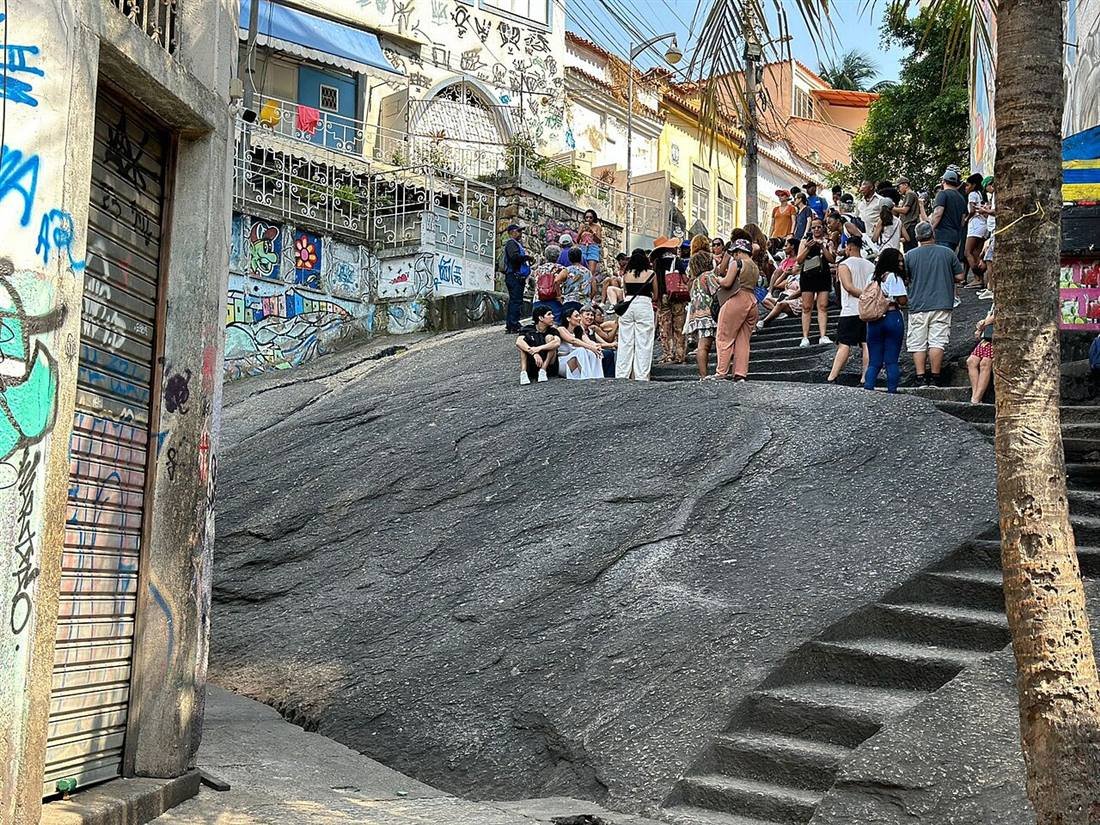
If Valongo is memory, Pedra do Sal is celebration. This stone stairway in Saúde was a quilombo (a community of free and escaped enslaved people) and a gathering point for Rio's Black community — and it's considered one of the birthplaces of samba.
It was nearby, in the homes of Bahian matriarchs like the legendary Tia Ciata, that samba took shape in the early 20th century. To this day, Pedra do Sal hosts free, vibrant samba circles on Monday and Friday nights — deeply carioca, and unforgettable. It's also a place of faith, tied to Afro-Brazilian religions.
More Places That Tell This Story
- New Blacks Cemetery (Cemitério dos Pretos Novos): where newly arrived Africans who didn't survive the crossing were buried — now a research and memory institute (IPN).
- Largo de São Francisco da Prainha: a charming square with a statue of Mercedes Baptista, pioneer of Afro-Brazilian ballet.
- Valongo Hanging Garden and Morro da Conceição: historic streets, viewpoints and colonial architecture.
- José Bonifácio Cultural Center: a key reference center for Black culture in Rio.
Why This Tour Is Different
Most visitors see Christ the Redeemer and Sugarloaf and leave without ever knowing this story exists. Little Africa isn't just a scenic walk — it's an experience that moves and teaches. You'll understand the roots of samba, the strength of Black resistance, and the soul of Rio.
The Carioca Travels Tour
We take you through Little Africa with experienced local guides who know the story behind every stone — from Valongo to Pedra do Sal. It's a walking cultural and historical tour, perfect for travelers who want to go beyond the postcards and truly understand Brazil.
- 🗣️ Guides who speak English, Spanish, French, Portuguese and more
- 🚶 Guided walk through the key Afro-Brazilian heritage sites
- 📸 Time for photos, questions, and taking it all in
- 🎶 Option to combine with a samba night at Pedra do Sal (Mondays & Fridays)
Price on request — we tailor it to your group and interests.
👉 Book your Little Africa tour on WhatsApp
FAQ
Where is Little Africa in Rio? In the old port zone, between the Saúde, Gamboa and Santo Cristo neighborhoods — close to Praça Mauá and the Museum of Tomorrow.
When should I visit Pedra do Sal? The samba circles happen on Monday and Friday nights. For the historical tour, any daylight hours work well.
Is the tour on foot? Yes, it's a walking tour. Let us know if you need accessibility accommodations and we'll adapt the route.